
How I Actually Handle Jet Lag (and Keep My Hormones, Energy, and Nervous System in Check While Traveling)
I’m a hormone + MTHFR focused wellness coach helping women support their bodies, lead with integrity, and build something meaningful — without hustle or burnout. I lead the top team in Michigan in my company. I love doing business with women like me, leading their homes in health + wellness and aren’t afraid to put in the work to put money in their families accounts.
There was a time when travel would completely throw me off.
Not just a little tired… I’m talking wired at night, exhausted during the day, digestion off, cravings all over the place, and feeling like my body just couldn’t catch up.

And the more I started traveling — especially across time zones — the more I realized something important:
My body doesn’t just “adjust”… it needs to be led.
Now that I understand my hormones, my nervous system, and how sensitive my body can be to disruption, I approach travel very differently. I don’t wing it anymore. I have a system.
And it’s the reason I can land in a new place and still feel like myself.
First: You Have to Respect Your Nervous System
This is where most people get it wrong.
Jet lag isn’t just about sleep — it’s about nervous system dysregulation.
When you’re changing time zones, altering sleep patterns, eating at different times, and adding travel stress… your body reads that as a full disruption.
And if you’re already a woman working on balancing hormones, blood sugar, or energy levels?
It hits harder.
That’s why I’ve learned to stop pushing through travel and start supporting my body through it.

What I Do Immediately When I Land
The first thing I prioritize is getting outside.
Sunlight is one of the most powerful ways to reset your circadian rhythm. Even 10–20 minutes of natural light tells your body:
“This is the new schedule.”
I don’t overcomplicate it. I walk, I breathe, I let my body catch up.
And honestly, this one shift alone makes a massive difference in how quickly I adjust.
I Anchor My Day with Protein (Non-Negotiable)
Travel can easily turn into grabbing whatever is convenient, skipping meals, or living off snacks.
That’s the fastest way to create blood sugar swings — which only makes jet lag worse.
So I stay anchored in one thing: protein first.
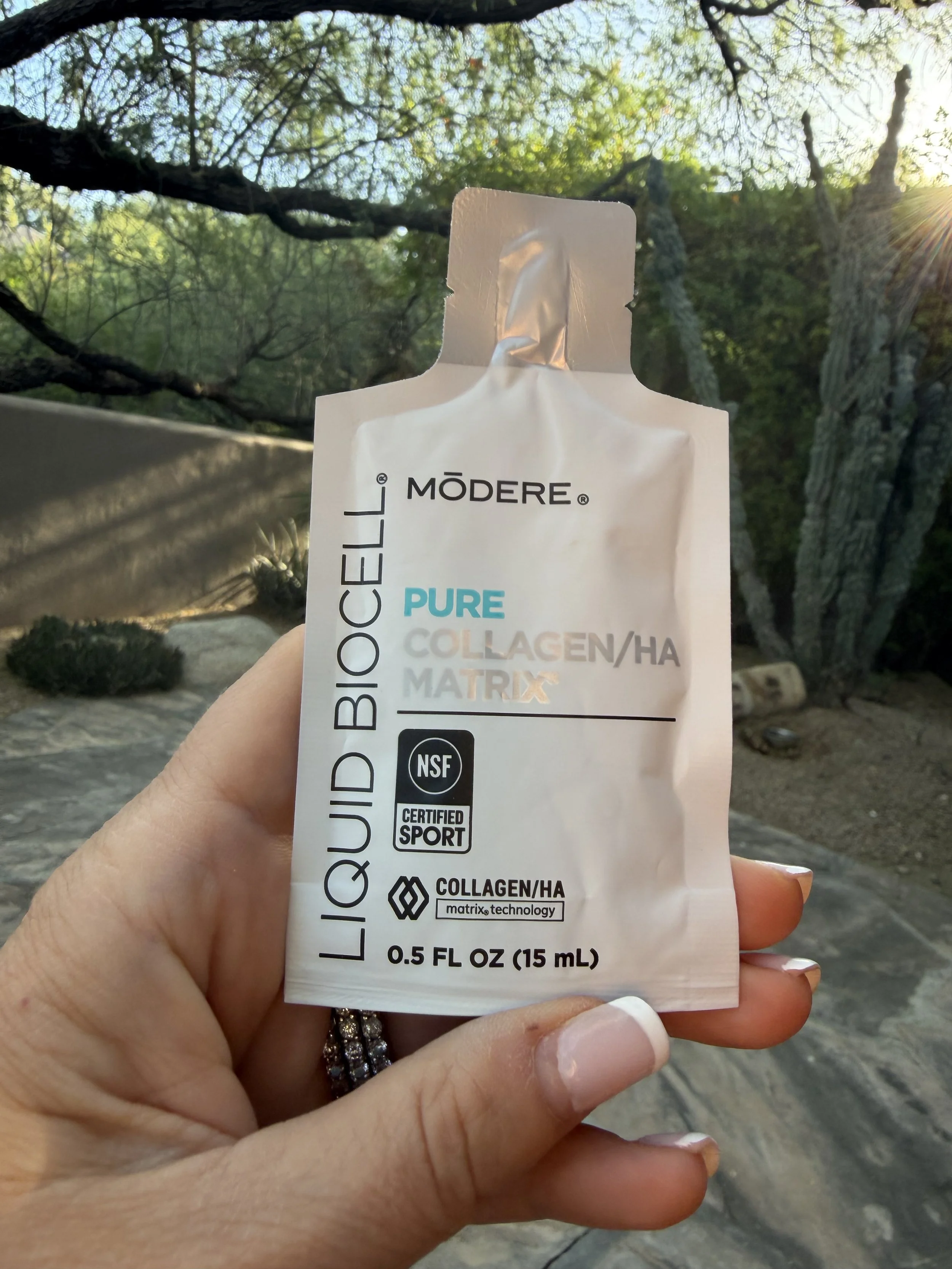
This is why I always travel with my staples:
Life Shake
My liquid collagen
Simple, reliable options that I know my body responds well to
Even if everything else is off, this keeps my energy stable, my cravings in check, and my body supported.
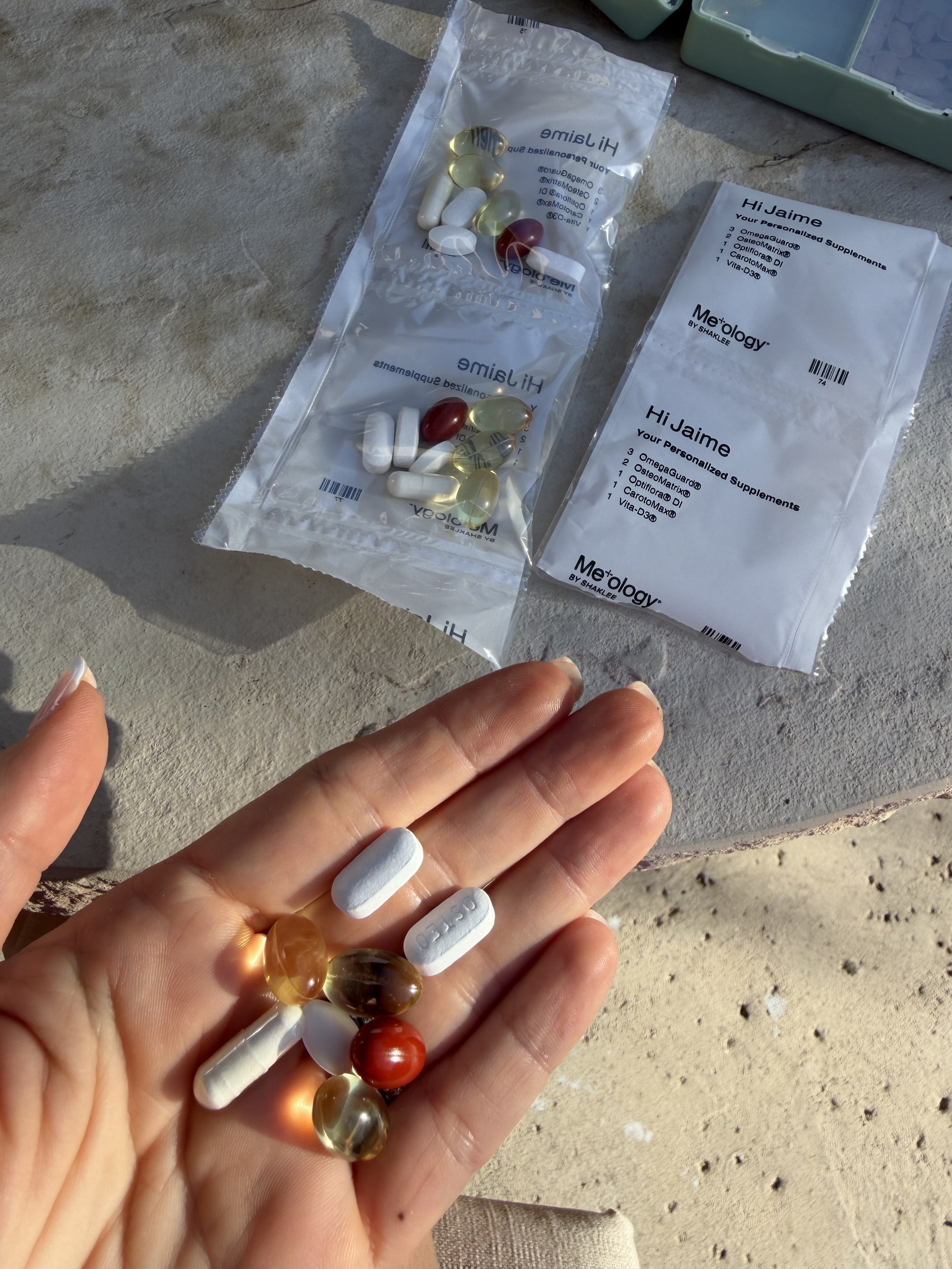
I Keep My Supplement Routine Simple but Strategic
I’m not bringing my entire cabinet with me — but I am bringing what matters.
For me, that usually looks like:
Foundational nutrition support
Liver support (because detox pathways matter more when routines shift)
Stress support for my nervous system
Collagen for recovery, skin, and overall cellular support
Must have supplements:
Travel puts more demand on your body. Supporting it intentionally changes everything.
I Adjust My Sleep — But I Don’t Force It
This is something I had to learn the hard way.
Trying to force sleep never works.
Instead, I:
Dim lights earlier in the evening
Limit stimulation at night
Allow my body to ease into the new time zone
If I wake up early? I don’t panic. I use it.
If I’m tired earlier? I go to bed.
It’s less about control and more about guiding my body gently into rhythm.
Hydration Is Not Optional
Flying alone is dehydrating.
Add in different climates, more movement, and disrupted routines — and your body feels it fast.
I make hydration intentional:
Water consistently throughout the day
Electrolyte support when needed
Being mindful of caffeine so I’m not masking exhaustion
This alone helps with energy, digestion, and even how your skin looks while traveling.
I Build in Margin (This One Matters More Than You Think)
I don’t pack my travel days wall to wall anymore.
Because I know how I want to feel — not just what I want to do.
That means:
Slower mornings when possible
Walks instead of rushing
Giving my body space to adjust
This is a big part of protecting my nervous system — and it’s something I didn’t prioritize before.
Final Thoughts: You Don’t Have to “Bounce Back” From Travel
You can actually feel good while doing it.
But it requires intention.
It requires knowing your body.
And it requires supporting yourself in a way most people don’t think about.
Travel doesn’t have to mean:
Feeling inflamed
Losing progress
Starting over when you get home
When you support your body the right way, it becomes part of your lifestyle — not something that sets you back from it.
If you’re someone who travels, feels thrown off easily, or knows your body needs a little extra support…
This is exactly the kind of work I do with my clients.
Because when you understand your body at this level, everything changes — at home and on the go.
The information shared on this blog is for educational and informational purposes only and is not intended to diagnose, treat, cure, or prevent any disease. I am not a medical doctor, and this content is not a substitute for professional medical advice, diagnosis, or treatment. Always consult with your qualified healthcare provider regarding any questions or concerns about your health.